| |
The Game | Star Fleet | Other | Forum |
« About the Site / Legion of HonourCrystalCrystal, which is our desktop that we use for films and TV, has undergone so many upgrades in its long life, that the only original part of the machine is the OCZ ZT 650W PSU. 
Phase 1 (2012 - 2018) Crystal originally had a Phenom II X6 1045T, running on an Crosshair V Formula mainboard, with 4 x 4 GBs of Vengeance Blue and an XFX Radeon HD 7870 DD Black. At that time, the machine had a 2TB Samsung F4, a 2TB WD20EARX, a 4TB Deskstar and a 6TB WD60EZRX for storage. It inherited Akina's Antec Veris front panel, but with the DS200 (see below) having only two front bays, it now has a Rii i25 air mouse/keyboard/remote, which works well because you can also operate the TV from the same remote. 
Phase 2 (2018 - 2025) Not very long after that, the Crosshair mainboard began to overheat; the mainboard, CPU and RAM were replaced with an ASUS PRIME X370-Pro, a Ryzen 7 1700 and 2 x 8GB Vengeance DIMMs. Originally, the machine had liquid CPU coolers: an Antec Kuhler 620, and then a Corsair H80i V2, but the Ryzen 1700 runs quietly on its stock fan and heatsink. In 2020, it had an WD M2 drive added for the OS, replacing its 2.5" SSD to help reduce the number of cables in the chassis. 
Phase 3 (2025 - ) In the same year, Crystal's duties were expanded to host the large file area. In 2026, I re-housed the machine in a new case. Rain
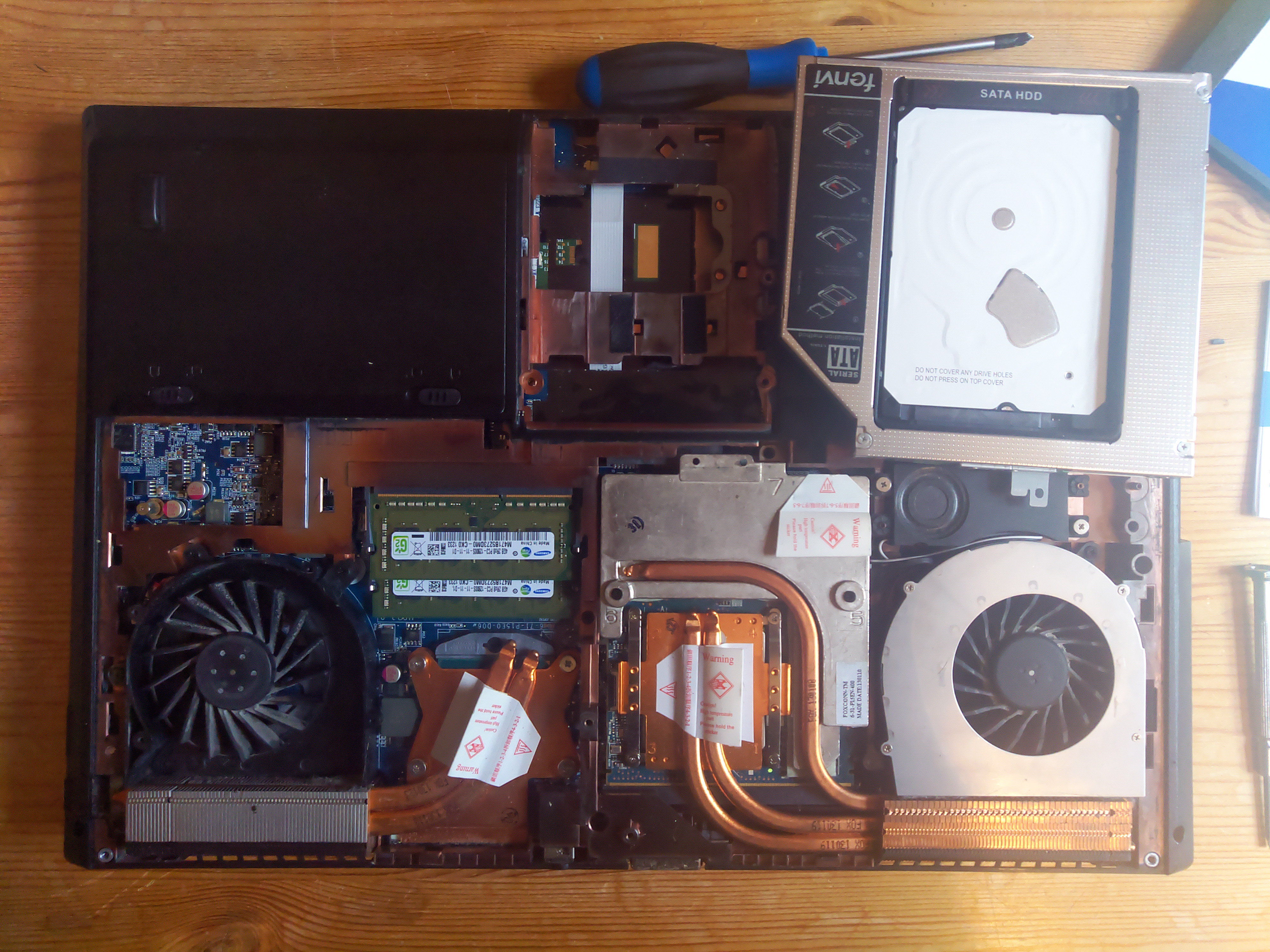
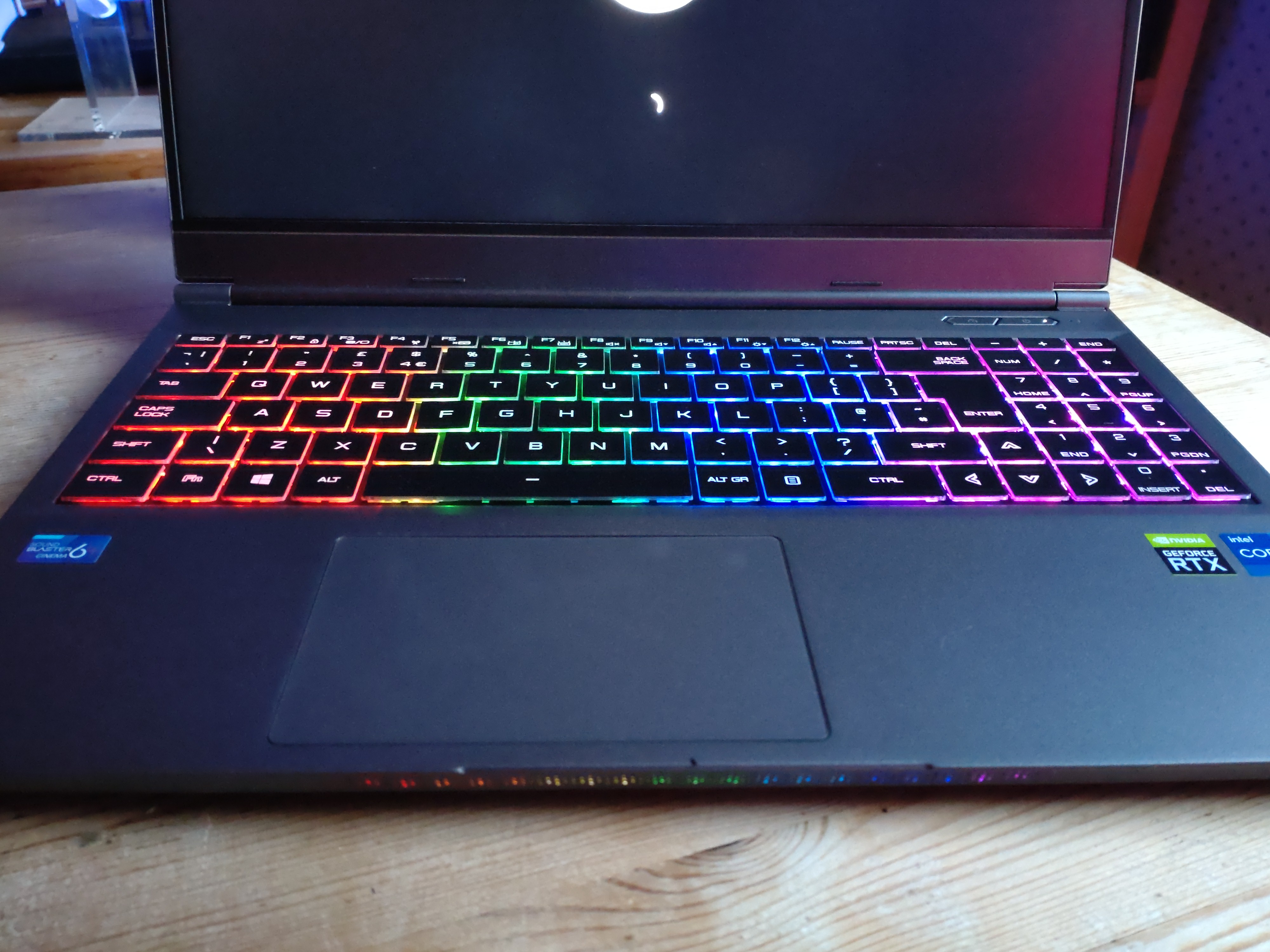
PC Specialist Vortex III / Clevo P150EM This was a great laptop with an i7 3630QM, 2 x 8GB DIMMs, and a Radeon HD 7970M, that lasted really well: longer that I would have expected from a gaming laptop. There was a second 2.5" hard disk in the bay for the optical drive, which gave it some internal storage redundancy. In 2020, I changed the 1TB Momentus XT and 1TB Scorpio Blue disks to a WD 1TB Blue SSD and a 2TB spindle, which gave it enough storage to last it the rest of its life. In its last year of operation, its GPU started having problems. It held out just long enough for its replacement to arrive before it died completely. Klan
Dell XPS m1730 (2011.3 - 2013.3) This was an amazing machine that I picked up for very little through the Dell reseller: MCS. It had the then-top-of-the-line Core2Extreme X9000 CPU, which the mainboard even allowed you to overclock. On the storage layer, it had 2 x Western Digital 250GB 7200rpm drives that ran in RAID 0, which made it very snappy. It had a lovely 17" 1200p glossy 'Truelife' display, an illuminated silver keyboard and a neat little LCD display on the right side of the keyboard that displayed information from certain games such as inventory, as well as CPU and memory utilisation etc., which was very handy for code optimisation and debugging. MCS threw in a pre-installed and activated copy of Windows 7 x64 Ultimate Edition, which was a beautiful OS. Sadly, the machine wasn't long-lived. It developed a problem with its graphics adapter and could no longer be reflowed. Akina
Time Platina (2004.4 - 2012.4) This machine was a very fast machine for its time. It had one of the first 64-bit Athlon CPUs: an Athlon 64_3200+, running an an MSI MS-6471 mainboard, which made it sail through whatever you asked it to do. It had the fastest video card available at the time: an ATI-branded Radeon 9800XT. The machine was quite unreliable - especially in its early days. The manufacturer equipped it with with two DiamondMax 160GB ATA drives, which always seemed to give problems. At one point, it lost quite a lot of data, including a lot of sprites for X-Bomber the Game. The ATA drives were supplemented and ultimately replaced with SATA drives, including a 1TB Seagate Barracuda 7200.11/12, which had to be RMA'd a few times, plus a 320GB Samsung Spinpoint T166, which I took out of the external hard drive that I picked up in Germany. Since the machine had so many optical drive bays, I decided to use two of them to install an Antec Veris Premier front bay device, which included a very multifunctional remote, and was a great solution for turning the machine into a media center. I replaced the MSI board with a Foxconn 760GXK8MC-RS. The 9800XT eventually became a bottleneck and, by that time, almost all GPUs were made as PCI-Express cards. Rangiku
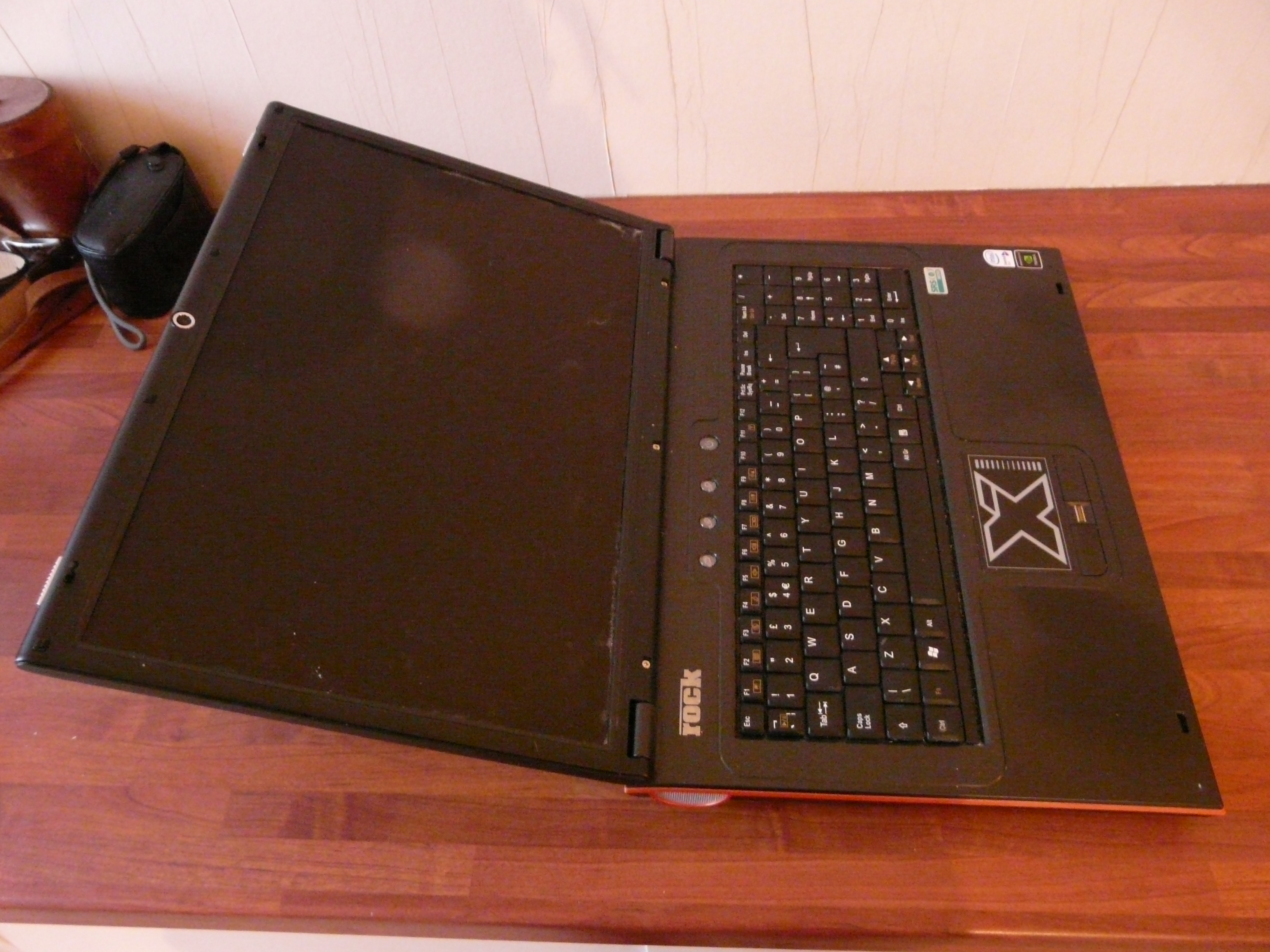
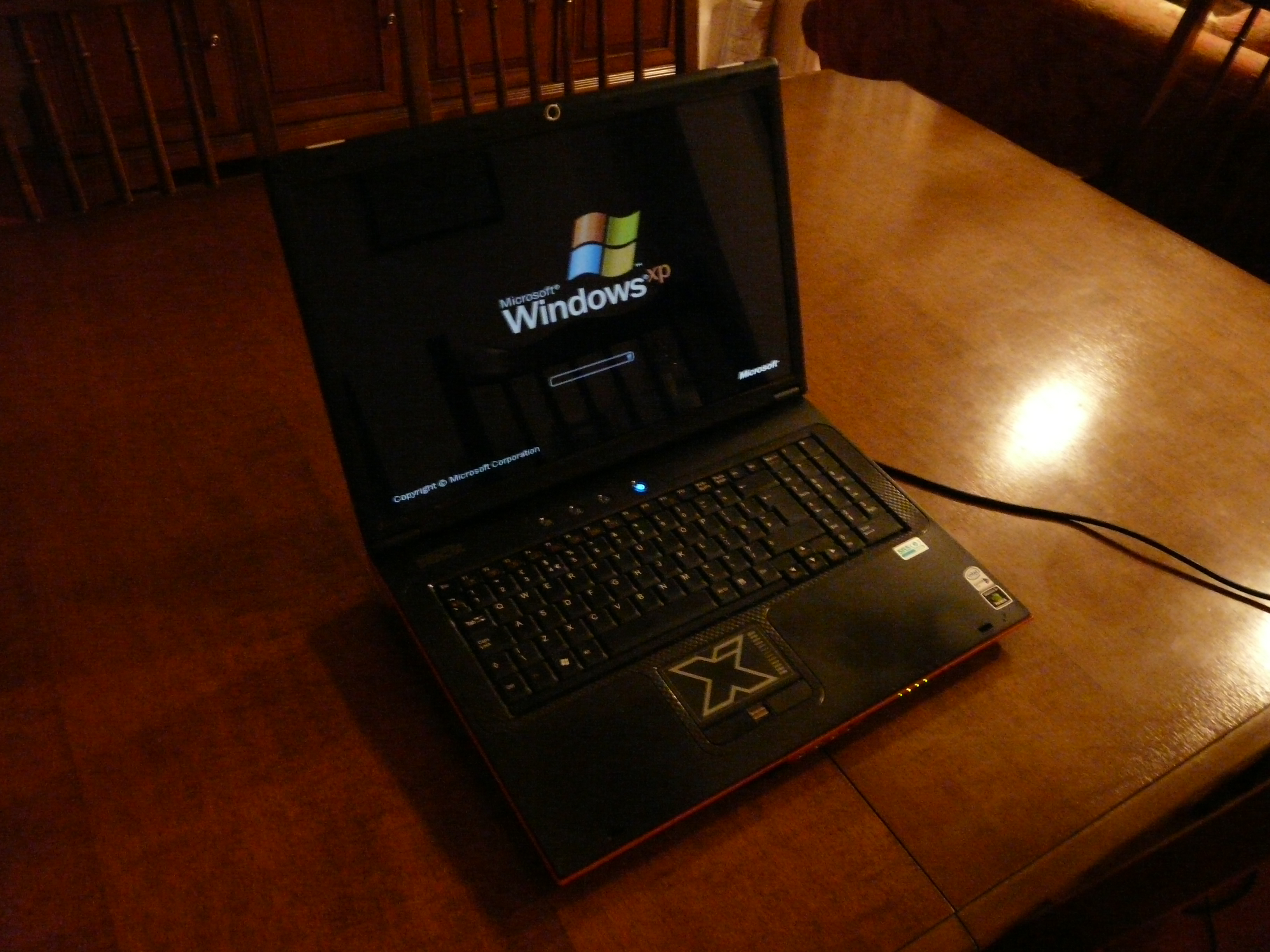
Rock X770 / Clevo M570RU (2007.8 - 2012.4) This was my first laptop. For my year working abroad in Germany, I wanted to be fully-loaded to work on X-Bomber the Game away from home. Rangiku was one of the first batch of X770s that Rock shipped out. The graphics card was a GeForce Go 7950 GTX. If I hadn't needed the machine in time to go abroad, I would've waited for the 8800GTX with DirectX 10 to become available. The machine had a cool, orange trim that set it apart nicely. Airport security were always very interested in the machine. Internal storage was limited to a 160GB Momentus 7200.2, which I later swapped for a 500GB 7200.4 with G-Force protection. Katie
Time Ultima 800-7 (2000 - 2006) This machine was an Athlon 800, running on an MSI MS-6167 board with 256MB RAM. The machine ran Windows 98 SE from a 30GB disk, and had a Soundblaster Live 1024, which Akina later inherited. |
OtherAbout the Site Games - Babylon 5 Into the Fire Ships - AS-5 Proteus TV Shows - Dan Dare Quick Links |
|
This site and content is unofficial; © 2002-2026 Piers Bell and other authors. Star Fleet, X-Bomber et al. © Enoki Films. |
|




.JPG)